Same Day Emergency Appointments Available!

Dental Anxiety in Adults: Why It Persists and How to Address It

Dental anxiety is more common than many people realize, especially among adults who may have delayed or avoided dental care for years. At Denville Dental Group, serving the Denville, NJ community, we often meet patients who walk in feeling nervous, hesitant, or even fearful about treatment. The good news is that dental anxiety is manageable—and with the right approach, it doesn’t have to stand in the way of your oral health.
In this blog, we’ll explore why dental anxiety persists into adulthood and practical, realistic ways to address it so you can feel more confident about your dental visits.
Why Dental Anxiety Persists in Adults
Dental anxiety doesn’t simply disappear with age. In fact, for many adults, it becomes more deeply rooted over time. Here are some of the most common reasons:
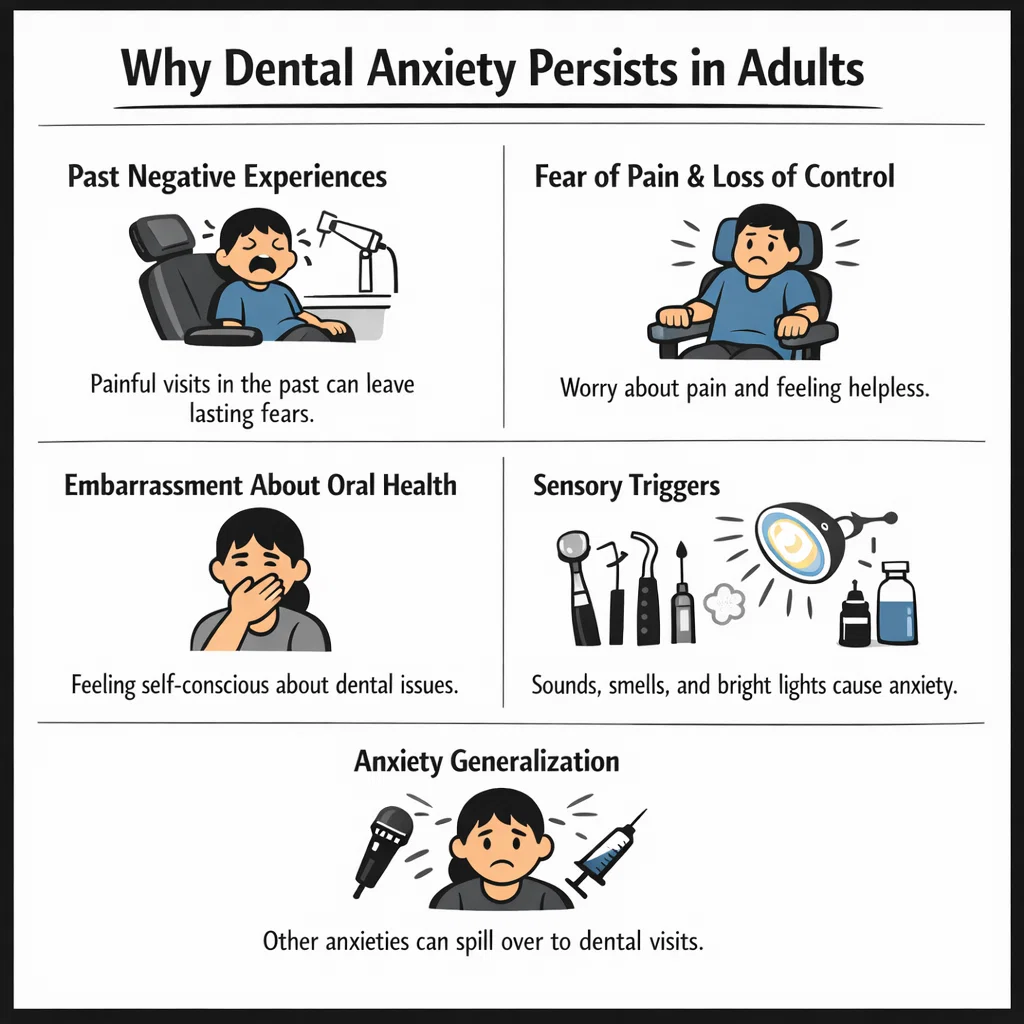
1. Past Negative Experiences
A difficult or painful dental visit in childhood or early adulthood can leave a lasting impression. Even one unpleasant experience may shape how someone feels about dentistry for years.
2. Fear of Pain or Loss of Control
Many adults associate dental procedures with discomfort or a sense of helplessness. The idea of sitting in a chair while someone works in their mouth can feel overwhelming.
3. Embarrassment About Oral Health
Some patients avoid the dentist because they feel self-conscious about the condition of their teeth. Over time, avoidance can worsen both anxiety and dental issues.
4. Sensory Triggers
The sounds of dental instruments, the smell of a clinic, or even the bright lights can trigger anxiety responses in sensitive individuals.
5. Anxiety Generalization
If someone experiences anxiety in other areas of life, such as public speaking or medical settings, that anxiety can extend to dental visits as well.
Signs You May Be Experiencing Dental Anxiety
Dental anxiety can show up in different ways. Some common signs include:
- Feeling nervous days before an appointment
- Difficulty sleeping the night before a visit
- Avoiding scheduling checkups altogether
- Sweating, rapid heartbeat, or restlessness in the waiting room
- Canceling or postponing appointments frequently
Recognizing these signs is the first step toward addressing the issue.
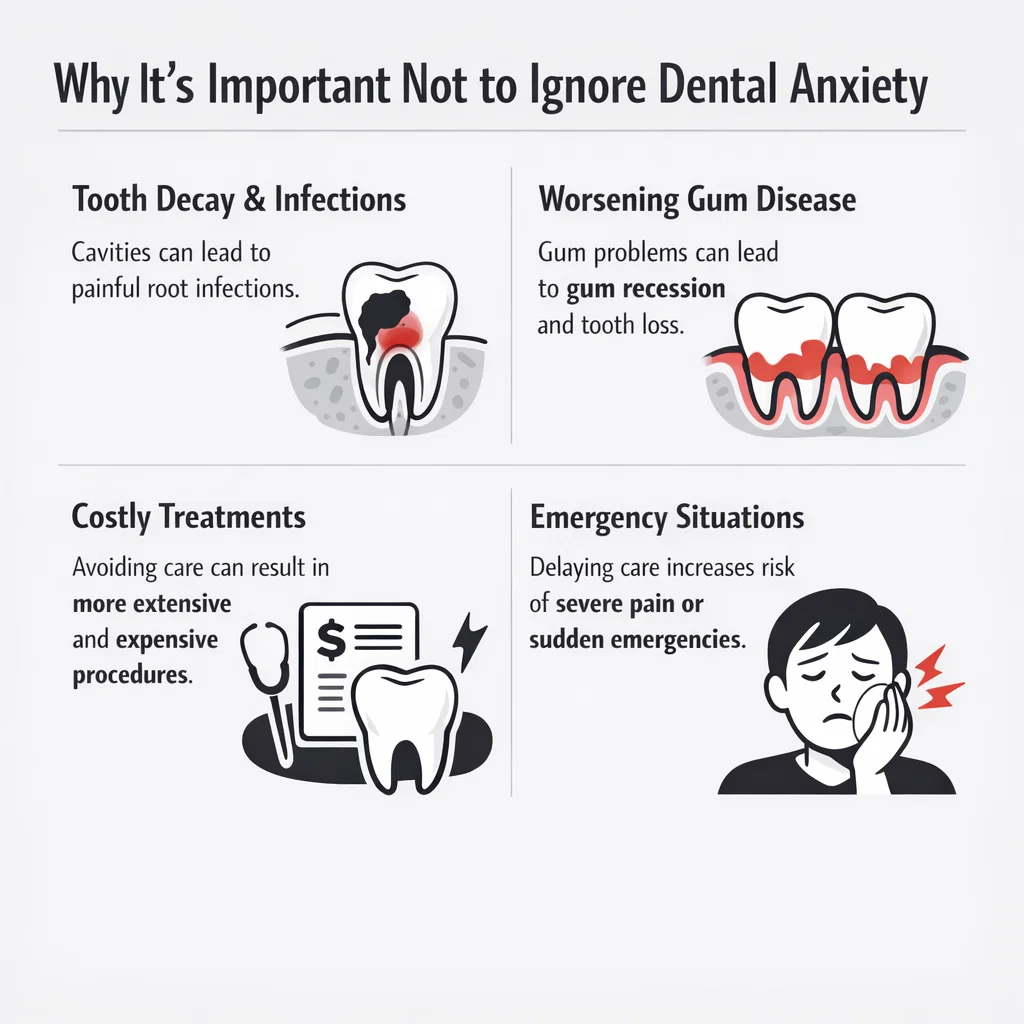
Why It’s Important Not to Ignore Dental Anxiety
Avoiding dental care due to anxiety can lead to more serious oral health problems over time, such as:
- Tooth decay progressing into root infections
- Gum disease worsening
- Need for more complex and costly treatments
- Increased discomfort or emergencies
Routine dental visits help catch issues early, making treatment simpler, quicker, and more comfortable.
How to Address Dental Anxiety Effectively
Overcoming dental anxiety doesn’t happen overnight, but small, consistent steps can make a significant difference.
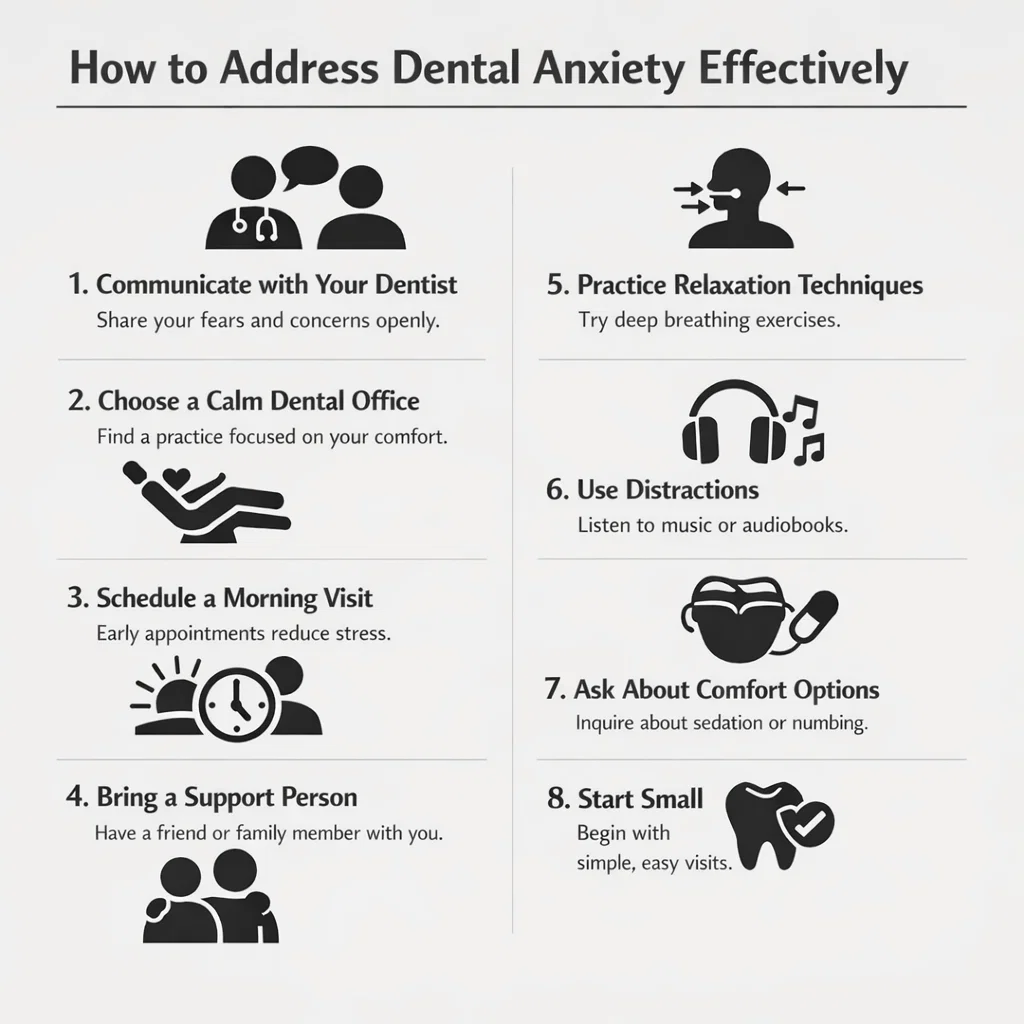
1. Communicate Openly With Your Dentist
Let your dental team know about your anxiety before your appointment. At Denville Dental Group, we encourage open conversations so we can tailor your experience accordingly.
2. Choose a Patient-Centered Dental Practice
Look for a dental office that emphasizes comfort, clear communication, and a gentle approach. A supportive environment can significantly reduce stress.
3. Schedule Morning Appointments
Booking early in the day can help prevent anxiety from building up throughout the day. It also ensures you’re less likely to cancel due to nervous anticipation.
4. Bring a Support Person
Having a friend or family member accompany you can provide reassurance and emotional support.
5. Practice Relaxation Techniques
Simple breathing exercises can help calm your nervous system:
- Inhale slowly for 4 seconds
- Hold for 4 seconds
- Exhale for 6 seconds
Repeating this pattern can help reduce tension before and during your visit.
6. Use Distraction Methods
Listening to music, podcasts, or audiobooks during treatment can help shift your focus away from the procedure.
7. Ask About Comfort Options
Modern dentistry offers various comfort-focused approaches, including numbing agents and sedation options when appropriate.
8. Start Small
If anxiety is severe, begin with a simple consultation or cleaning before progressing to more involved procedures. Building trust gradually can make future visits easier.
What to Expect at a Supportive Dental Visit
Knowing what will happen during your visit can significantly reduce uncertainty. A patient-focused dental experience typically includes:
- A calm, welcoming environment
- Time to discuss your concerns without pressure
- Step-by-step explanations of procedures
- Gentle techniques designed to minimize discomfort
- Opportunities to pause during treatment if needed
At Denville Dental Group, we prioritize making patients feel heard, respected, and comfortable throughout every stage of care.
When Should You Seek Help for Dental Anxiety?
You should consider addressing dental anxiety proactively if:
- You have been avoiding dental visits for over a year
- Anxiety is interfering with your oral health
- You feel panic or distress at the thought of treatment
- You have delayed care despite experiencing pain or symptoms
Taking the first step can feel challenging, but it’s often the most important one toward improving both your comfort and your health.
Take the First Step Toward a Stress-Free Dental Experience
Dental anxiety is common, but it doesn’t have to control your health decisions. With the right support, understanding, and care, visiting the dentist can become a much more comfortable experience over time.
If you’ve been putting off dental care due to anxiety, consider scheduling a consultation with Denville Dental Group in Denville, NJ. Our team is committed to providing a calm, patient-centered environment where your concerns are heard and your comfort comes first.
Your journey toward better oral health can start with a simple, stress-free conversation.
FAQs About Dental Anxiety in Adults
1. Is dental anxiety a real condition?
Yes, dental anxiety is a recognized condition that affects many adults. It can range from mild nervousness to severe phobia that prevents individuals from seeking care.
2. Can dental anxiety be completely eliminated?
While it may not disappear entirely for everyone, it can be significantly reduced with proper techniques, communication, and supportive dental care.
3. What if I haven’t seen a dentist in years due to fear?
It’s never too late to return to dental care. Start with a consultation where you can discuss your concerns without committing to treatment immediately.
5. Are there ways to feel calm during treatment?
Yes. Breathing exercises, distraction techniques, clear communication, and comfort-focused dental practices all help reduce anxiety during appointments.