Same Day Emergency Appointments Available!

Professional Teeth Cleaning in Denville, NJ
You brush twice a day. You floss. You rinse. So why does your dentist still find buildup at your checkup? The answer lies in something your toothbrush simply cannot touch: tartar. Understanding why brushing can’t remove tartar—and why you need professional cleaning in Denville—can completely change how you think about your oral health routine. At Denville Dental Group, Dr. Charles Matarazzo helps patients understand what’s really happening beneath the surface.
What Is Tartar—And How Does It Form?
Tartar, also called calculus, starts as plaque. Plaque is a soft, sticky film of bacteria that coats your teeth throughout the day. When you brush and floss regularly, you remove most of this plaque before it can cause harm.
The problem starts when plaque is missed. Within 24 to 72 hours, plaque begins to harden. Minerals from your saliva bind to the bacterial film and calcify it onto your tooth surface. Once that process is complete, you no longer have soft plaque. You have hardened tartar.
Tartar bonds directly to tooth enamel. It has a rough, porous surface that attracts even more bacteria. It forms most commonly along the gumline and between teeth—exactly where your toothbrush has the hardest time reaching.
Why Brushing Can’t Remove Tartar Once It Hardens
This is the part most patients find surprising. No matter how hard you brush, your toothbrush bristles cannot break the bond between tartar and enamel. Tartar is essentially a mineralized deposit—it behaves more like a calcium shell than a sticky film.
Brushing harder doesn’t help. In fact, aggressive brushing can irritate your gums and wear down enamel while leaving tartar completely intact. The bond tartar creates requires professional tools to break safely and effectively.
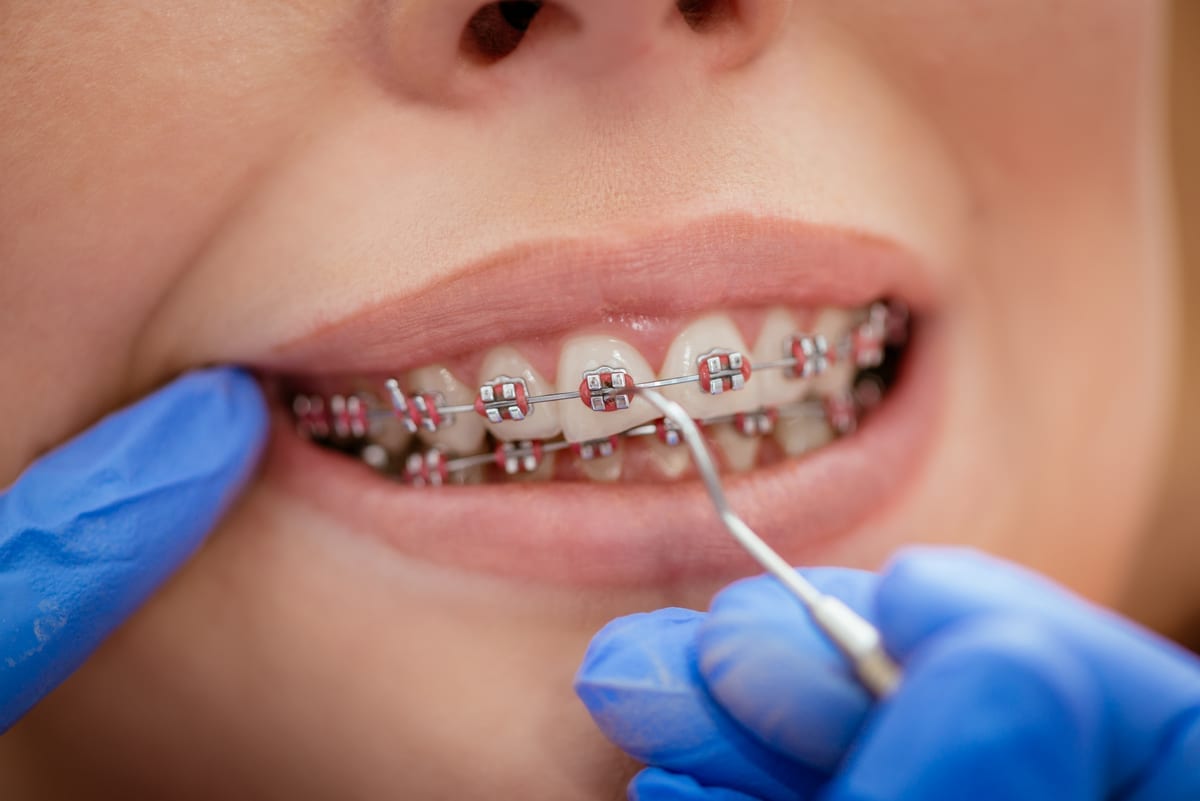
Special dental instruments called scalers use precise vibration and pressure to chip away hardened deposits without damaging the underlying tooth structure. These are tools only a trained dental professional can use correctly. This is exactly why brushing can’t remove tartar—and why professional cleaning in Denville matters so much for long-term health.
What a Professional Cleaning Actually Removes
A professional cleaning at Denville Dental Group goes far beyond what your toothbrush can accomplish. Here is what our hygienists and Dr. Matarazzo address during your visit:
- Supragingival tartar — deposits sitting above the gumline that are visible on the tooth surface
- Subgingival tartar — hardened buildup hiding below the gumline, often the most damaging type
- Surface stains — discoloration from coffee, tea, and food that polishing removes after scaling
- Residual plaque — soft deposits in hard-to-reach areas your brush consistently misses
- Bacterial biofilm — colonies of harmful bacteria embedded in tartar that contribute to gum disease
The cleaning ends with a professional polish that smooths tooth surfaces. Smoother enamel makes it harder for new plaque to stick. Your teeth leave cleaner—and stay cleaner longer.
The Health Consequences of Skipping Professional Cleanings
Tartar buildup is not just a cosmetic issue. Left untreated, it creates serious problems throughout your mouth. The bacteria living in tartar produce toxins that inflame your gum tissue. That inflammation is gingivitis—the earliest stage of gum disease.
Without intervention, gingivitis progresses to periodontitis. Periodontitis destroys the bone and connective tissue that hold your teeth in place. Tooth loss becomes a real risk. Patients who experience significant bone loss may eventually need Dental Implant Restoration to replace missing teeth and restore function.
Tartar buildup also contributes to cavities, persistent bad breath, and receding gums. These are all conditions that become harder and more expensive to treat the longer they go unaddressed. Consistent professional cleanings are one of the most effective ways to prevent all of them.
How Often Should Denville Patients Schedule a Cleaning?
Most adults benefit from a professional cleaning every six months. However, some patients need more frequent visits. If you have a history of gum disease, you may need cleanings every three to four months. People who build tartar quickly are also better served by more regular appointments.
Dr. Matarazzo evaluates each patient individually. He considers your personal health history, rate of tartar accumulation, and gum health before making a recommendation. There is no single answer that fits every patient.
Between visits, your home care routine still matters enormously. Brushing twice daily, flossing once daily, and using an antibacterial mouthwash all reduce the rate at which plaque develops into tartar. Your daily habits and professional cleanings work together—not as substitutes for each other.
What to Expect During Your Cleaning at Denville Dental Group
Many patients feel anxious about cleanings because they have experienced discomfort in the past. At Denville Dental Group, we prioritize your comfort at every step. Here is what a typical cleaning visit involves:
- Health review — we update your medical and dental history and note any changes since your last visit
- Gum assessment — we measure pocket depths around each tooth to monitor gum health
- Scaling — our hygienist carefully removes all tartar deposits above and below the gumline
- Polishing — a gentle polish removes surface stains and smooths enamel
- Fluoride treatment — a fluoride application strengthens enamel and helps prevent new decay
- Exam with Dr. Matarazzo — a thorough check for cavities, early disease, and any concerns
If Dr. Matarazzo identifies issues beyond a standard cleaning, he will discuss your options clearly. This may include treatments covered under Restorative Dentistry to repair any damage tartar buildup has caused. The goal is always to restore and maintain your healthiest possible smile.
Simple Habits That Slow Tartar Buildup Between Visits
While home care cannot remove tartar once it forms, it absolutely slows how fast tartar develops. A few consistent habits make a meaningful difference:
- Brush for a full two minutes using a soft-bristled toothbrush
- Use a tartar-control toothpaste with fluoride
- Floss every day to disrupt plaque between teeth before it hardens
- Rinse with an antibacterial mouthwash to reduce bacterial load
- Drink plenty of water, especially after meals, to flush away food particles
- Limit sugary and starchy foods that feed plaque-producing bacteria
These habits will not replace professional cleaning. But they will make each cleaning visit more manageable and protect your teeth in between appointments.
Schedule Your Professional Cleaning in Denville Today
Your toothbrush is an essential tool—but it has real limits. Once tartar forms, only a dental professional can safely remove it. Skipping cleanings allows harmful buildup to progress silently until it causes damage that is harder to reverse. The good news is that prevention is straightforward. Regular professional cleanings at Denville Dental Group give Dr. Matarazzo the opportunity to catch problems early and keep your smile healthy for years to come. Book Now to schedule your appointment with our team.
Frequently Asked Questions
Can tartar be removed at home with special tools or products?
No. Over-the-counter tartar-control products can slow plaque buildup, but they cannot remove hardened tartar that has already bonded to your teeth. Attempting to scrape tartar at home with tools risks damaging your enamel and injuring your gums. Professional dental instruments and training are required to remove tartar safely.
How long does it take for plaque to turn into tartar?
Plaque can begin hardening into tartar in as little as 24 to 72 hours if it is not removed. This is why daily brushing and flossing are so important—the goal is to disrupt plaque before it has the chance to calcify onto your tooth surface.
Does tartar cause bad breath?
Yes. Tartar has a porous surface that harbors bacteria. Those bacteria release sulfur compounds that produce persistent bad breath. Removing tartar through professional cleaning often significantly improves breath that home care alone has not been able to address.
What happens if I have a lot of tartar buildup below the gumline?
Significant subgingival tartar may require a deeper cleaning procedure called scaling and root planing. This goes below the gumline to remove deposits and smooth the root surface. Dr. Matarazzo will assess your gum pocket depths and recommend the appropriate level of care based on what he finds.
Is professional cleaning painful?
For most patients with healthy gums, a professional cleaning is comfortable with only mild sensitivity. Patients with inflamed or receding gums may experience more sensitivity during scaling. Dr. Matarazzo and our hygiene team take a gentle approach and can discuss comfort options if you have concerns before your visit.