Same Day Emergency Appointments Available!

Can Cosmetic Dentistry Repair Enamel Damage?
If your teeth look dull, feel sensitive, or show small chips and rough edges, enamel damage may be the reason. It’s one of the most common concerns we see at Denville Dental Group—and one of the most misunderstood. The good news? While enamel can’t grow back naturally, modern dentistry offers several effective ways to restore both the look and function of your smile.
Let’s walk through what enamel damage really means and how it can be treated.
What Is Enamel Damage?
Enamel is the hard, outer layer of your teeth. It protects against daily wear from chewing, temperature changes, and acids. Over time, it can weaken due to:
- Frequent consumption of acidic foods and drinks (think coffee, soda, citrus)
- Teeth grinding or clenching
- Aggressive brushing habits
- Poor oral hygiene
- Natural aging
Once enamel is worn down, it doesn’t regenerate. That’s why early care—and the right treatment—matters.
Signs Your Enamel May Be Worn
Not sure if you’re dealing with enamel damage? Here are some common signs:
- Increased tooth sensitivity (especially to hot or cold)
- Yellowing teeth (dentin showing through)
- Small chips or rough edges
- Shiny or smooth spots on teeth
- Cracks or uneven surfaces
If you’ve noticed any of these, it’s worth getting a professional evaluation.
Can It Be Repaired?
While enamel itself cannot regrow, it can absolutely be restored cosmetically and functionally. Today’s dental techniques are designed to strengthen your teeth and improve their appearance—often in just a few visits.
Here’s how:
Treatment Options That Restore Your Smile
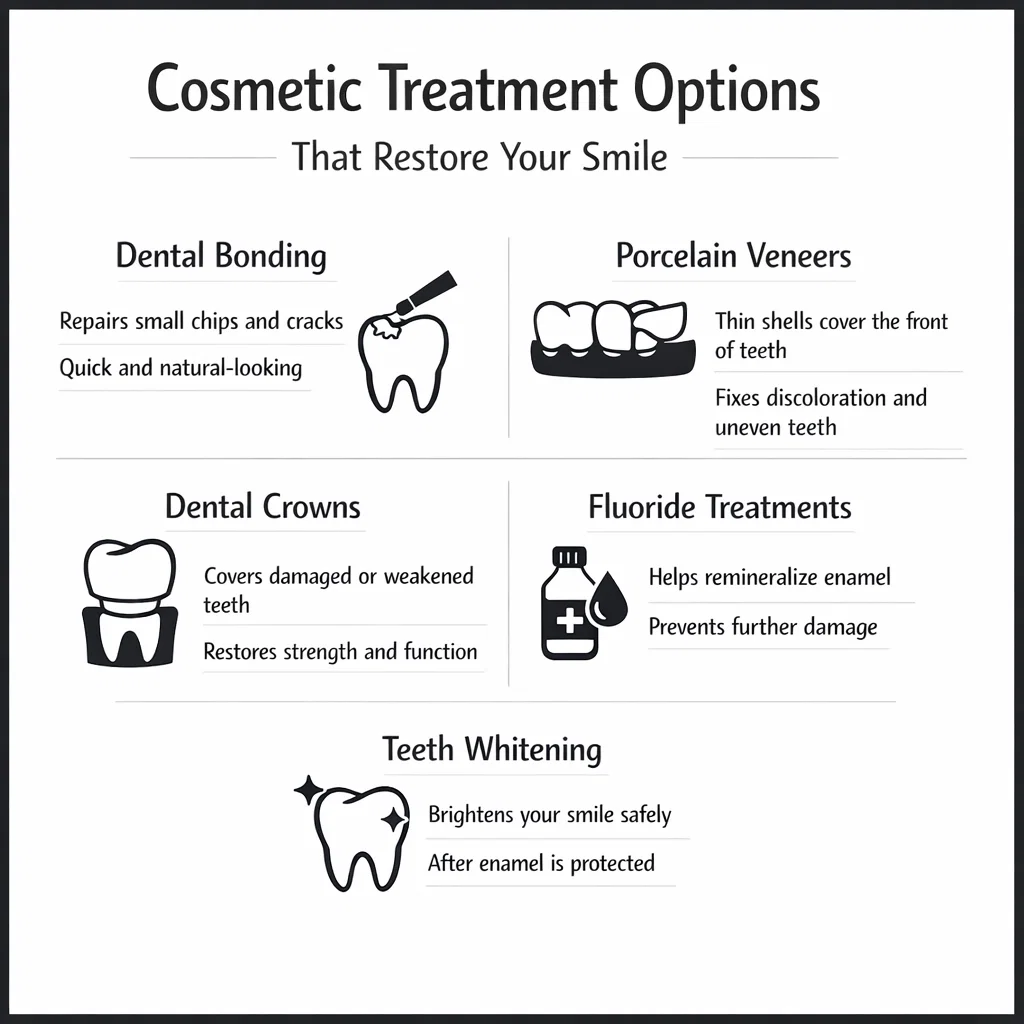
1. Dental Bonding
A tooth-colored resin is applied to repair minor chips, cracks, and worn areas. It’s quick, affordable, and blends naturally with your teeth.
Best for: Small areas of enamel loss or minor cosmetic concerns.
2. Porcelain Veneers
Thin, custom shells are placed over the front of your teeth to mask damage and create a smooth, even surface.
Best for: Moderate enamel wear, discoloration, or uneven shapes.
3. Dental Crowns
For more severe damage, crowns cover the entire tooth, restoring strength and protecting what’s left of the natural structure.
Best for: Advanced enamel erosion or structural weakness.
4. Professional Fluoride Treatments
In early stages, fluoride can help remineralize weakened enamel and reduce sensitivity.
Best for: Preventing further damage and strengthening enamel.
5. Teeth Whitening (After Protection)
Once your enamel is protected or restored, whitening can enhance your overall smile safely.
Simple Ways to Protect Your Enamel
Prevention plays a huge role in keeping your smile strong. Here are a few easy tips:
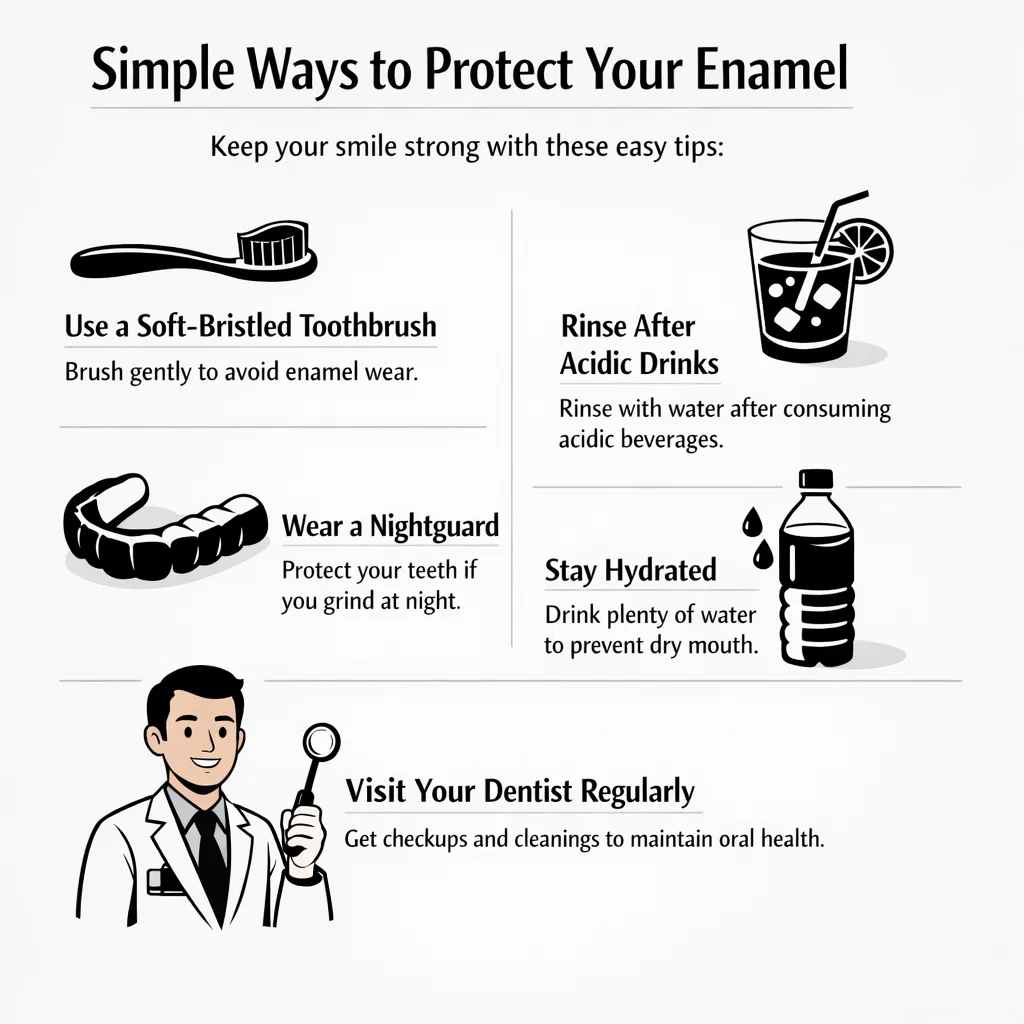
- Use a soft-bristled toothbrush and gentle pressure
- Limit acidic drinks or rinse your mouth after consuming them
- Wear a nightguard if you grind your teeth
- Stay hydrated to avoid dry mouth
- Visit your dentist regularly for cleanings and checkups
When Should You See a Professional?
If sensitivity is becoming frequent, or you notice visible changes in your teeth, don’t wait. Early treatment can prevent more extensive procedures later.
A consultation with a cosmetic dentist can help determine the best solution based on your specific condition and goals.
Restore Your Smile with Confidence
Enamel damage doesn’t have to define your smile. With the right care, you can regain both comfort and confidence—often faster than you think.
If you’re in or around Denville and have noticed signs of wear, sensitivity, or discoloration, the team at Denville Dental Group is here to help. Personalized treatment plans and modern techniques make it easier than ever to protect and enhance your smile.
Schedule your consultation today and take the first step toward stronger, healthier teeth.
FAQs
Can enamel grow back naturally?
No, enamel does not regenerate. However, early damage can be strengthened through remineralization and protected with the right treatments.
Is enamel damage permanent?
The damage itself is permanent, but it can be effectively treated and restored using modern dental procedures.
Are these treatments painful?
Most cosmetic procedures are minimally invasive and comfortable. Local anesthesia is used when needed to ensure a pain-free experience.
Is treatment expensive?
Costs vary depending on the severity of the damage and the solution chosen. Many options are more affordable than patients expect.